
Strength Training for Osteoporosis: It’s Never Too Early or Too Late!
Osteoporosis affects millions, especially postmenopausal women, and often develops silently. Many people don’t realize they have low bone density until a fracture occurs. At Pure Strength LA, our goal is to reverse or halt osteoporosis before that happens, using science-backed slow strength training that protects your bones, builds muscle, and supports a longer, healthier life.
Although osteoporosis is most commonly diagnosed around menopause, bone loss often begins decades earlier. That’s why strength training is valuable at every stage of life — to build up a reserve of bone density and lean mass before problems arise. And even if you've already been diagnosed, it’s never too late. The body still has the remarkable ability to respond and adapt to properly applied strength training.

Why Osteoporosis Happens
Bone density peaks around age 25, and then gradually declines when breakdown outpaces remodeling, around age 40. Post-menopausal women are especially vulnerable to bone loss after menopause due to hormonal shifts. The most common sites for osteoporosis and osteopenia are the wrists, spine, and hips. For women, hip fractures are the most serious consequence of osteoporosis, often leading to long recovery times after accidents, and, in older women, increased mortality (Johnston et. al.1 and Gao et. al.2)
The Science: Wolff’s Law and Bone Adaptation
Bones are living tissue. Wolff’s Law states that bones are structurally designed to adapt to stresses placed up on them (Whiting & Zernicke). When muscles pull on bones, as they do during resistance training, and when bones are safely loaded with progressive force, they remodel and become stronger. High-quality, high-intensity, slow strength training provides the specific mechanical stimulus bones need to stay strong as we age. You can’t walk your way to better bone density. And, all you need is 20 minutes once or twice a week to halt bone loss in its tracks.
(William Charles Whiting, & Zernicke, R. F. (2008). Biomechanics of Musculoskeletal Injury. Human Kinetics.3)
The Power of Slow: What Makes Our Program Different
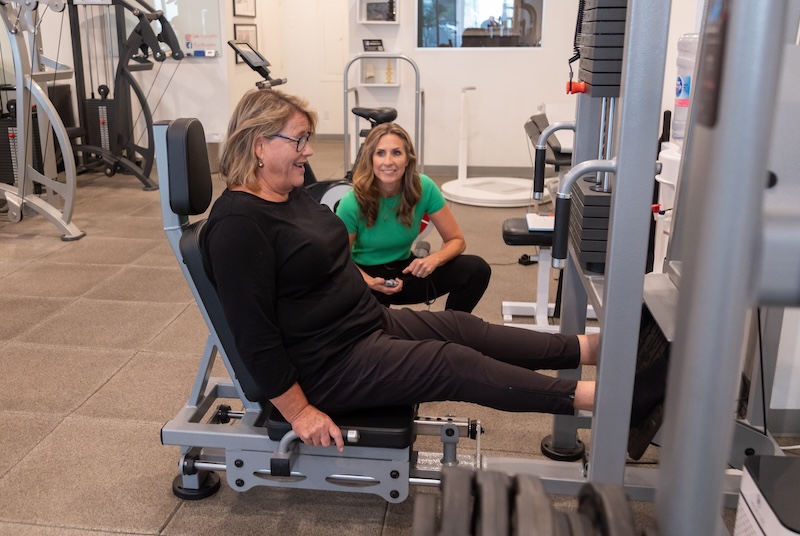
We often hear: “once a week can’t possibly be enough!” When it comes to strength training, less is more. In 1982, Ken Hutchins, under the auspices of Nautilus, led a pioneering study at the University of Florida Medical School. The study assessed the impact of slow, controlled resistance training on individuals with osteoporosis. This research was instrumental in developing the slow training protocol, characterized by deliberate movements. Each exercise involves 10 seconds for both lifting and lowering phases to minimize momentum and enhance muscle fiber engagement. Participants were weak, older women who were concerned about the safety of conventional exercise. By implementing this technique, these subjects demonstrated substantial improvements in strength and bone density.
How We Safely Build Bone
When training with osteoporosis or osteopenia, avoiding forward bending movements, such as crunches or excessive spinal flexion, is crucial. These positions increase the risk of vertebral fractures and strain the spine. Instead, exercises should focus on maintaining a neutral spine position while strengthening muscle groups safely.
A structured strength training program should include safe, targeted exercises that maintain spinal alignment, core stability, and lower body strength to support balance and prevent falls. People with osteoporosis should avoid exaggerated spinal flexion (forward bending), twisting, jerking, or torquing movements at the waist, and crunching movements. Our machines have been hand-picked to avoid aggravating low density areas while still building them.
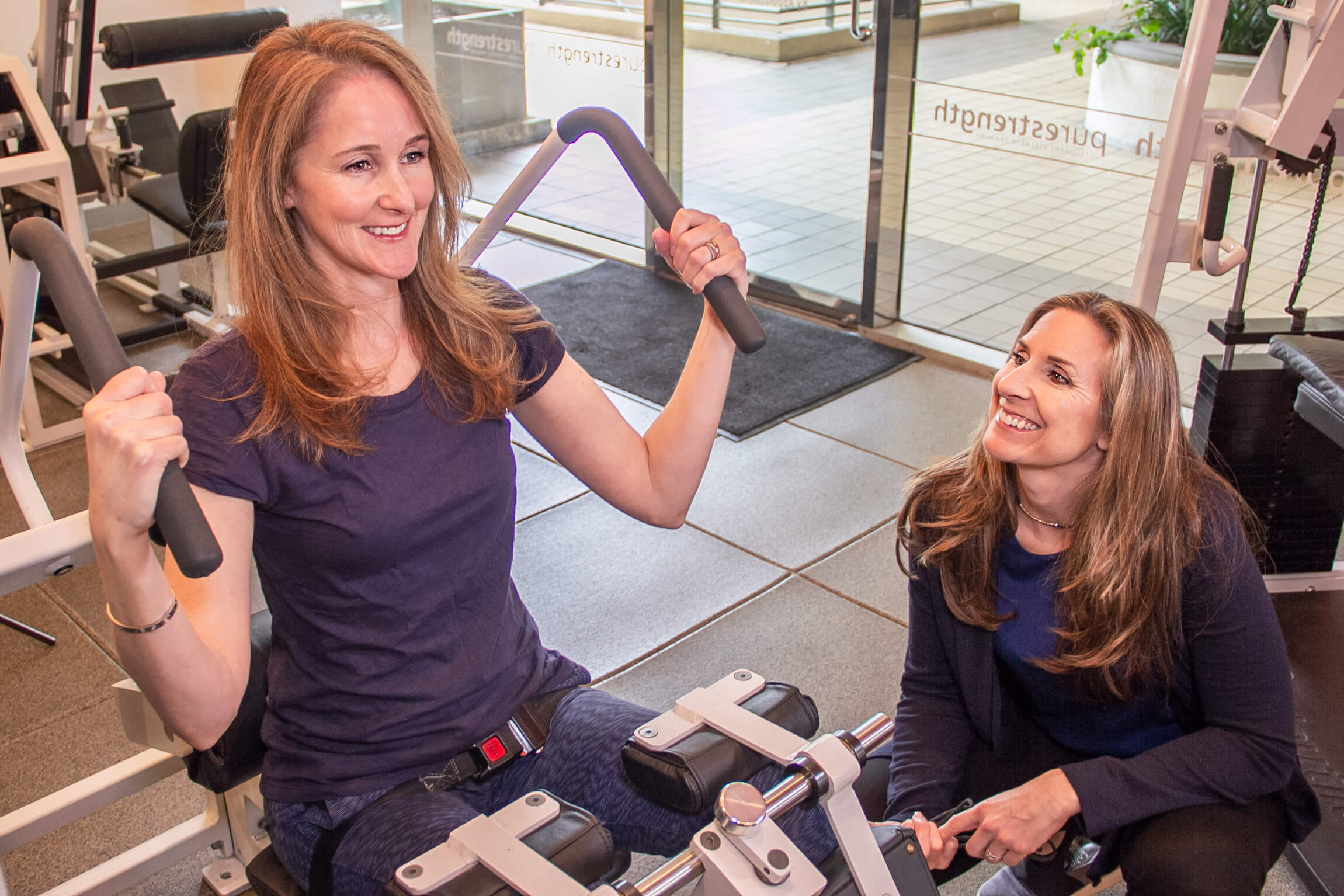
Pendulum Squat
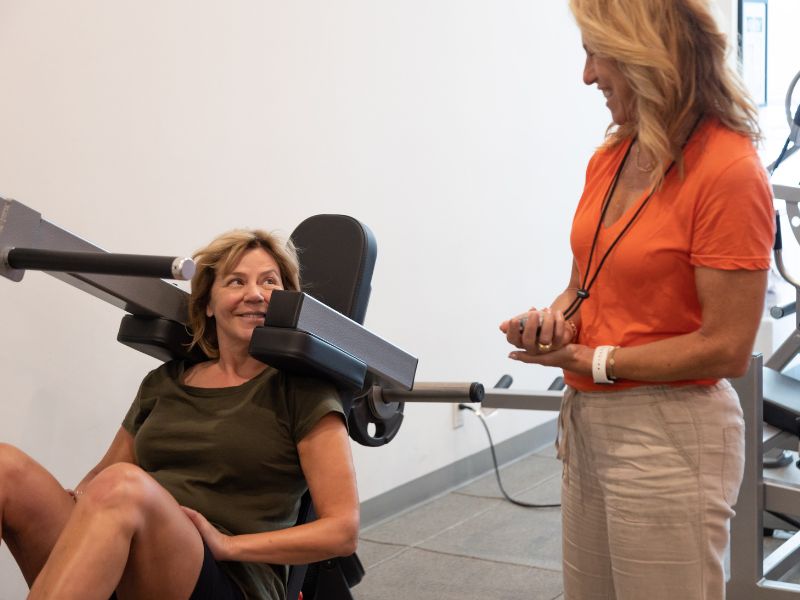
This machine allows you to safely perform a squat without placing any load on the spine, making it ideal for those with osteoporosis or osteopenia in the hips and spine. The open-chain movement encourages proper form and gradually improves hip mobility, all while strengthening the lower body in a supported, low-risk position.
Gluteator
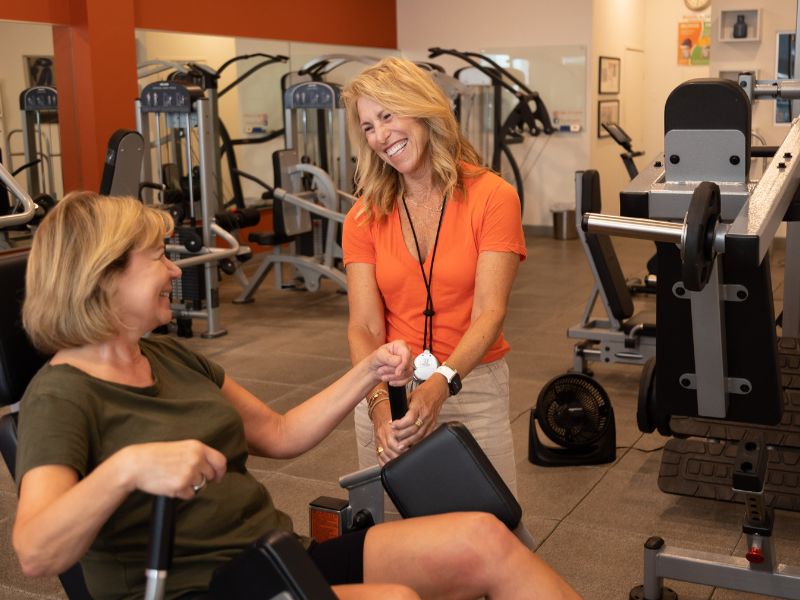
Our rare and advanced glute machine positions you in a slightly reclined, strapped-in seat, reducing strain on the lower back while activating all three parts of the glute muscles. Strengthening the glutes improves hip stability, reduces back pain, and helps prevent muscle atrophy in the buttocks, often called “dead butt syndrome, ”which is common with age and inactivity.
Pulls
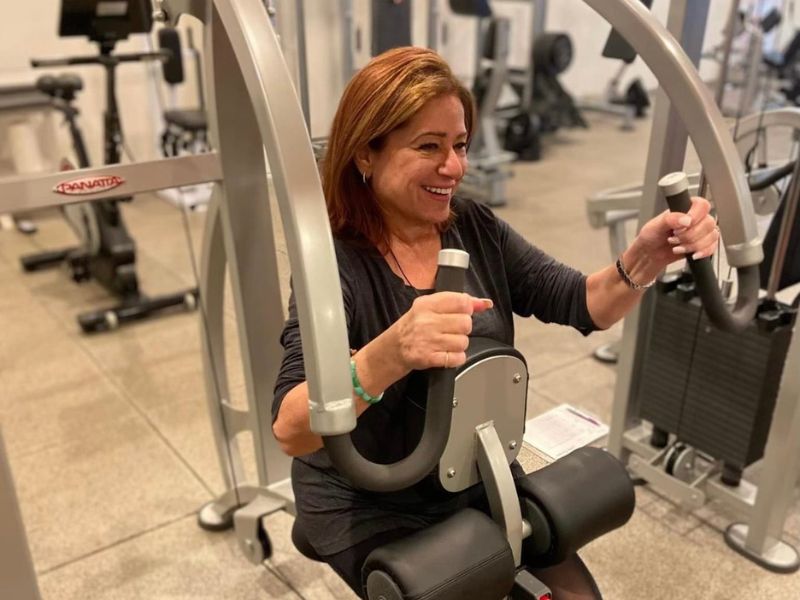
Our high row and pulldown machines improve posture and posterior chain strength, supporting spinal alignment. The muscle surrounding vertebrae closer to the neck and head need to support the vertebrae just as much as the ones closer to the tailbone. These machines are also ideal to help support those with lordosis, kyphosis, and scoliosis.
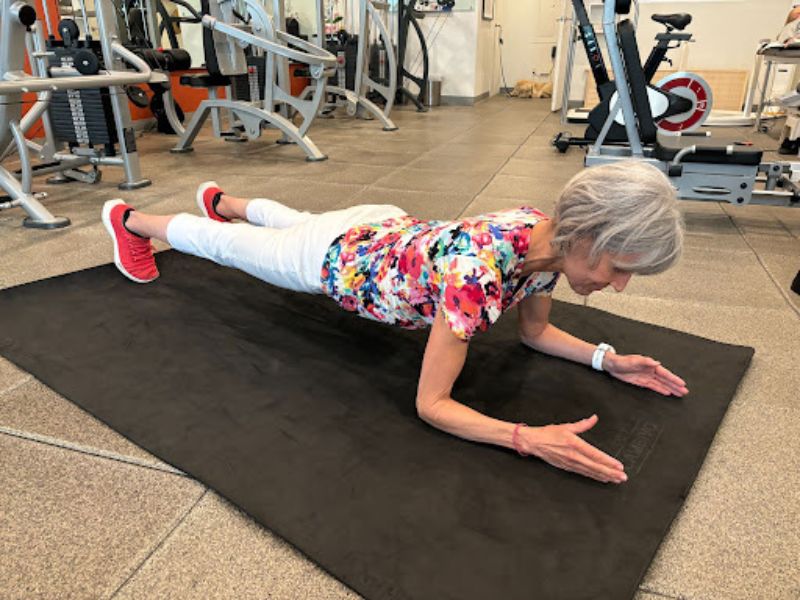
Isometric Core Work
Core training without bending or twisting is essential for those with osteoporosis. Isometric exercises keep the spine in a neutral position while safely building strength in the abdominals and spinal stabilizers. A strong core enhances balance, posture, and daily movement while lowering the risk of falls and vertebral fractures.

Low Back Machine
Unlike traditional back extension stands, our Atlantis D-134 allows you to strengthen spinal muscles through controlled flexion and extension without the risk of hyperextension. This machine supports the spine in a fixed position, helping reduce the risk of compression fractures while improving posture and spinal stability.
Book Your First Session
We offer a 12-week guarantee and a $100 credit toward your first month when you book an initial consultation.
Let us show you how strength training—done correctly—can change your life.
Frequently Asked Questions
Ready to see results for yourself?
Read our testimonials to hear from clients who’ve experienced the benefits firsthand.
- Johnston, C. B., & Dagar, M. (2020). Osteoporosis in Older Adults. Medical Clinics of North America, 104(5), 873–884. https://doi.org/10.1016/j.mcna.2020.06.004
- Gao, S., & Zhao, Y. (2022). Quality of life in postmenopausal women with osteoporosis: a systematic review and meta-analysis. Quality of Life Research. https://doi.org/10.1007/s11136-022-03281-1
- William Charles Whiting, & Zernicke, R. F. (2008). Biomechanics of Musculoskeletal Injury. Human Kinetics.