
Strength Training For Women
At Pure Strength LA, we specialize in slow, controlled strength training that transforms your body in just 30 minutes, once or twice a week. Our method builds lean muscle, protects joints, and supports lifelong health without hours of cardio or endless workouts.
Why Strength Training Matters More As You Age
Starting as early as our 30s, women lose 3–8% of muscle mass per decade, and this accelerates during perimenopause and menopause (Volpi et. al)1. Even modest losses can dramatically affect balance, metabolism, mobility, and bone health. This muscle loss, known as sarcopenia, is a silent but critical risk factor for osteoporosis, falls, fractures, and loss of independence. Many don't notice symptoms until later in life when activities of daily living become harder to accomplish. The sooner you begin to combat muscle loss, the better. That said, meaningful improvements are possible at any age!
Strength training stimulates muscle growth, improves posture, preserves bone density, and fortifies the body, helping you stay strong, mobile, and vibrant through every stage of life.
The Truth About Cardio and Weight Loss
Excessive cardio without strength training is a recipe for disaster. And, combined with restricted eating, pushes the body towards survival mode. In this state, we retain everything we eat, while simultaneously using muscle instead of sugar or fat for energy. Relapses of food consumption often follow, a phenomenon known as yo-yo dieting. In the long run, strength training is the foundation to sustaining an active lifestyle.
The Myth - "I need endless cardio to lose weight."
The Truth - Cardiovascular exercise is an important component of fitness, but is not a one stop shop to comprehensive fitness. The more lean muscle mass you acquire, the more calories you burn during exercise, after exercise, and most importantly, while you rest. Make your body work smarter, not harder, by improving your metabolism with strength training and not wasting long hours in the gym.
Our strength training sessions provide a cardiovascular benefit during your workout due to their intensity. Remember, your heart is a muscle too. We also recommend staying active throughout the week with activities you enjoy, as long as you don’t overdo it.

How We Engage Both Type 1 and Type 2 Muscle Fibers
Did you know that we have different muscle fiber types in our bodies, and that each has different physiological characteristics that can be improved (Kenney et. al.)2? Most of us have about 50% of each fiber type. At Pure Strength LA, we strategically activate both slow twitch (type 1) and fast twitch (type 2) muscle fibers. When you train to muscular fatigue or “failure,” all muscle fibers have been recruited sequentially, ensuring maximum benefit.
Type 1 (recruited first)
- Smaller muscle fibers that are resistant against fatigue
- Smaller motor units
- These fibers are trained when you perform consistent aerobic exercise.
…they are trained here at Pure Strength as well due to the level of intensity you reach, and thus do not need to be trained as frequently outside of the facility!
Why does this matter?
Training type 1 fibers improves your ability to sustain activities that require long periods of movement, like walking, climbing stairs, or standing, without feeling fatigued. This is especially important as you age, as it helps improve mobility and supports overall functional independence.
Type 2 (recruited second)
- Larger muscle fibers that generate large amounts of force
- Larger motor units
- Most people do not exhaust these muscles safely…
…but at Pure Strength we train these fibers to failure because they hypertrophy, or grow, the most!
Why does this matter?
Type 2 fibers are essential for explosive strength and power, which helps you with tasks like lifting heavy objects, sprinting, or recovering quickly from a fall. As we age, we naturally lose type 2 fibers, which can lead to a decrease in overall strength and increased fall risk. By safely training to muscular failure (reaching fatigue), we help prevent this loss, improving muscle strength, bone density, and mobility. This is especially crucial for older individuals, as maintaining type 2 muscle mass is a key factor in preventing sarcopenia (muscle loss with age), boosting metabolism, and preserving overall health.
Our technique provides the opportunity to achieve well-rounded, complete health. Remember - anything in excess can be harmful, including cardio (aerobic) exercise.
Specialized Equipment for Safer, Deeper Strength
While traditional strength training often relies on free weights, which can be difficult to manage with proper form, machine-based training ensures correct alignment and greater control, and facilitates the micro-tears necessary for muscular adaptation, which are accelerated by moving slowly. Our studio features rare, state-of-the-art strength machines designed for:
- Joint protection - smooth, friction-free motion reduces injury risk.
- Deep muscular engagement - continuous time under tension ensures maximum results in less time.
- Micro-tears for growth - small, safe muscle fiber tears stimulate lean muscle building and metabolic health.
Book Your First Session
We offer a 12-week guarantee and a $100 credit toward your first month when you book an initial consultation.
Let us show you how strength training—done correctly—can change your life.
MACHINES YOU WON’T FIND ELSEWHERE
These machines aren’t found in typical gyms. We selected them specifically to reduce joint strain and maximize safe muscle recruitment.
Gluteator
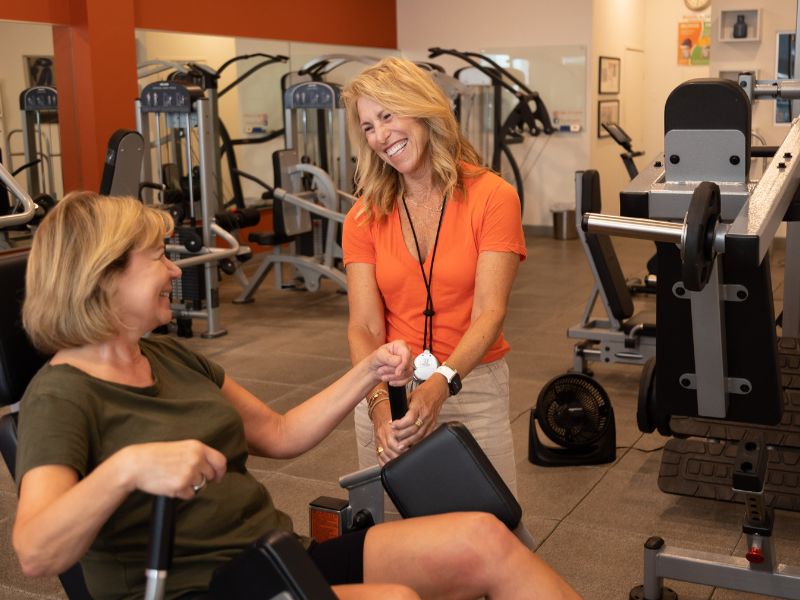
Not your average abduction machine, our machine has you slightly reclined and strapped in your seat, protecting the back as you move. Strengthens all three parts of the glutes, reducing low back strain and improving pelvic stability and hip mobility. The largest muscle in the body is the gluteus maximus. Age and sedentary behavior can significantly decrease mass in this area, a condition known as “dead butt syndrome.” Strong glutes means reduced low back pain and improved gait.

Static Exercise Machine
This rare piece of technology allows you to safely perform isometric strength exercises for the chest, back, and neck without joint movement. Because your joints remain still, it’s ideal for individuals recovering from injury or dealing with shoulder or cervical spine sensitivities. The static nature of the machine allows for intense muscle recruitment while minimizing strain on vulnerable areas. It’s a highly controlled way to build strength, improve posture, and enhance neuromuscular engagement without risking joint irritation.

Rotator Cuff Machine
Neck and shoulder tension often stem from poor shoulder stability and weak rotator cuff muscles. The rotator cuff is a group of four small muscles that stabilize the highly mobile ball-and-socket shoulder joint. Because these muscles are small and easily overpowered by larger muscles, it's important to isolate and strengthen them to prevent compensation patterns that can lead to neck, upper back, and shoulder pain. This machine allows for safe, isolated external and internal rotation to target these muscles directly—helping improve posture, reduce strain on the neck, and support healthier shoulder mechanics.
Muscle is Your Armor!
Building muscle won’t make you bulky. The more lean mass you have, the more “cut” and toned you appear. At Pure Strength we do not neglect any muscle groups, ensuring proportionality, and balanced, functional strength. Muscle also acts as our internal armor, protecting our joints and bones, and acting as a first defense against falls. We train the entire body during every session because our goal is maximum muscle fiber recruitment, thus driving greater adaptation to achieve stronger, faster, and sustainable results while still allowing time for recovery.
Through compound exercises like the leg press, pulldown, and chest press, we target major muscle groups across the entire body:
Lower Body
- Quadriceps
- Gluteus Maximus
- Hamstrings
- Adductors
- Core & Lower Back (for stability and support during movements)
Upper Body Pulling (Pulldown)
- Back Muscles Back muscles (trapezius, rhomboids, latissimus dorsi)
- Postural muscles (including spinal erectors and core stabilizers)
- Biceps (long and short head)
Upper Body Pushing (Chest Press)
- Chest (Pectorals)
- Shoulders (Deltoids)
- Triceps
Frequently Asked Questions
Ready to see results for yourself?
Read our testimonials to hear from clients who’ve experienced the benefits firsthand.
-
- Volpi, E., Nazemi, R., & Fujita, S. (2004). Muscle Tissue Changes With Aging. Current Opinion in Clinical Nutrition and Metabolic Care, 7(4), 405–410. https://doi.org/10.
1097/01.mco.0000134362.76653. b2 - W Larry Kenney, Wilmore, J. H., & Costill, D. L. (2019). Physiology of Sport and Exercise (5th ed.). Human Kinetics.
- Volpi, E., Nazemi, R., & Fujita, S. (2004). Muscle Tissue Changes With Aging. Current Opinion in Clinical Nutrition and Metabolic Care, 7(4), 405–410. https://doi.org/10.